
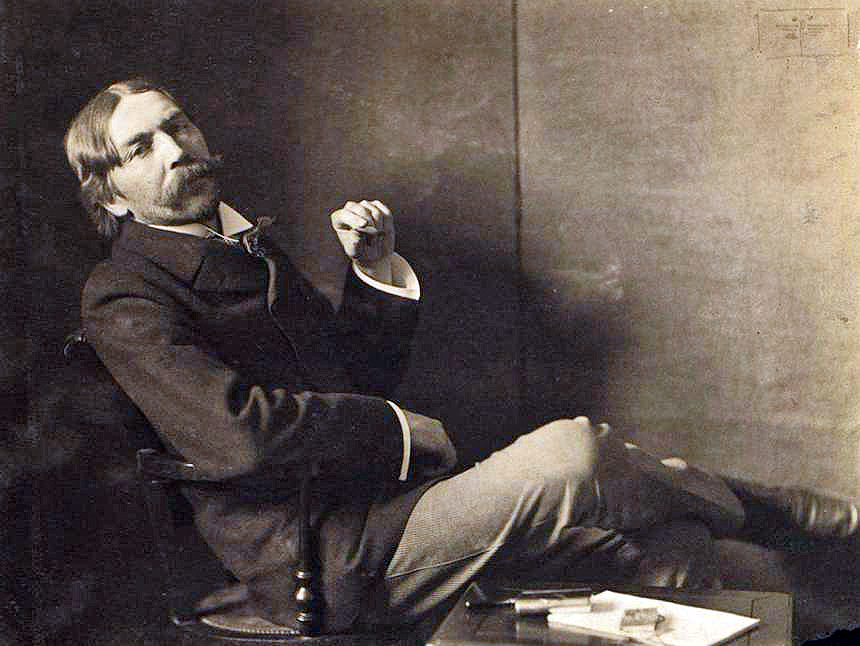
In 1899, Thorstein Veblen wrote that as societies become wealthy, the upper class cements its status by avoiding physical labor. Lifting, cleaning, and building all become marks of social inferiority, work the rich would not be caught dead doing.
Abstention from labour is not only a honorific or meritorious act, but it presently comes to be a requisite of decency… The group of employments that are classed as exploit are worthy, honourable, noble; other employments, which do not contain this element of exploit, and especially those which imply subservience or submission, are unworthy, debasing, ignoble.
– Veblen, Theory of the Leisure Class
Because we are taught that we want to be rich, we adopt the values of the rich as our own. Let us trace each generation to see how the concept of work has been devalued to its breaking point, where today the youth simply do not want to work at all.
The Boomers
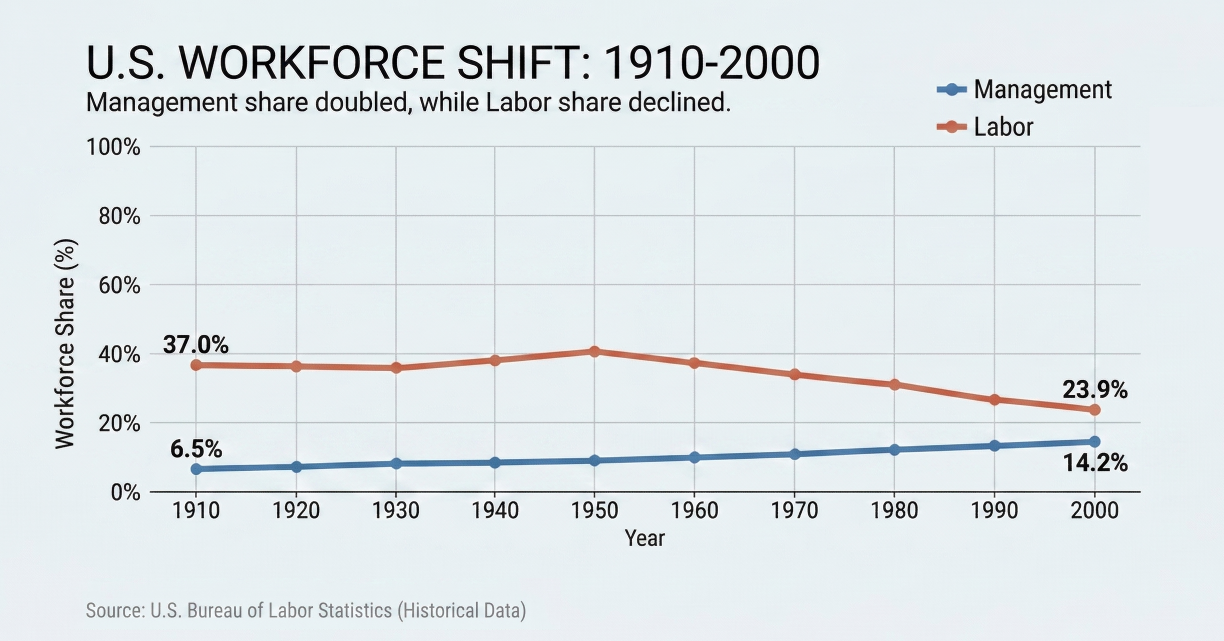
Nothing is more profitable than the exploitation of labor. And so the Boomers expanded the managerial class—a role that produces nothing but manages those who do.
They made this class the aspiration of all workers, for it meant rising above the ignoble work of making things to the noble work of directing others.
And so the Boomers pushed production overseas, and America thought this well and good, for China, Bangladesh, Vietnam, and the rest could be made to labor in its place.
Middle management then spread across the United States and other wealthy nations. The Boomers claimed these seats and remain in them today, unwilling to retire or give them up.
The Millennials
Boomers taught their sons to prize the exploitation of labor. It was a lie. While physical labor is abundant, managerial labor is finite and held by the old.
The Millennials were set to chase carrots. “Go into debt, get a degree, and spare yourself a life of flipping burgers,” the Boomers told them.
This did two things: it codified physical labor as a punishment for the uneducated, and it bound the Millennial to debt that only labor could repay.
So the Millennial enters adult life despising labor, yet trapped in it. Indebted, credentialed, and shut out of the class he was taught to seek.
The Fevered City
You can judge a society by what it pays for. Ours makes rich the grifter, the whore, the loudmouth, and the man who manages other men’s work. It keeps poor the farmer, the builder, the mechanic, and the woman who wipes the old and bathes the sick.
Those workers are not only poor but despised. No one wants to be them because such work leads to neither wealth nor status.
Plato saw this long ago. In The Republic, Socrates first describes a city where men work only enough to feed, clothe, and house themselves. Another man objects that such a life is fit for pigs and asks for luxury instead. Socrates then shows that once men live for luxury, the city grows diseased.
We have built an economy not on what sustains life, but on what feeds appetite. From it the young learn a simple lesson: do not make things. Perform.
The Zoomers
When a teenager sees his peer become a millionaire by dancing on TikTok or shrieking at video games, the thought of putting on a Taco Bell uniform or hauling drywall becomes unbearable. The injury is not that physical labor pays so little; the insult is that society makes rich the people who produce nothing.
For every streamer who buys a house, tens of thousands stream to no one for pennies. But people judge by what they can see, and the failures are invisible. So the young take to digital grifting as a career path.
“Hard work pays off” means nothing to Zoomers. The managerial seats are held by the old, fought over by the middle-aged, and barred to the young. Their only rational move is to hit the lotto.
So they bet on crypto, stock options, and polymarkets. Work will not buy them a house, a family, or dignity, but gambling might.
There is no ladder left in the American workforce, so these men dig into debt in the hope of striking oil. They risk financial ruin and achieve it, losing the savings that made life bearable.
After they gamble away their last thousand dollars, they are left with nothing: no will to work, and no reason to.
Imported Labor
When a country’s youth turn against physical labor, the elite import bodies to build the homes and pick the crops.

But a man who leaves home and crosses an ocean did not come to scrub floors forever. In time, he will want better work. To keep him in the worst work, he must be kept afraid.
ICE crackdowns help keep immigrant labor cheap and deportable.
In Dubai’s kafala system, migrant workers build the country but can never become its citizens. When their backs break, they are deported and replaced.
And when immigrant labor is not enough, states loosen child labor laws and employers turn to children.
Unloved Males
The way to get rid of a surplus of aimless men is to put them to work or to kill them at war. But these solutions fail in the modern era.
Conscription no longer works. The old rewards of enlistment are worthless. The GI Bill guarantees no job. A zero-down VA loan is useless to a man who cannot afford the mortgage on a half-million-dollar home.
Make-work programs fare no better. The New Deal offered meager wages for public works, sustained by civic pride. That pride is gone. A man who refuses to haul drywall for minimum wage will not break his back for a government stipend paid in inflated dollars.
These men have nothing to build and nowhere to bleed.
Cura Annonae
“Do not press a desperate foe too hard.”
– Sun Tzu, The Art of War
The rich know that the cheapest way to stop revolt is to surrender a portion of their wealth. American elites did this during the New Deal, making concessions for fear communism would overthrow them.
The Covid stimulus checks served the same purpose. Rome had its own version: the Cura Annonae, a state grain dole drawn from Egypt and North Africa and distributed to the citizens of the capital.
It began with subsidized grain for male citizens, then widened into bread, oil, pork, and wine. Hundreds of thousands in Rome depended on it.
This was the bread in Rome’s bread and circuses. It helped preserve order for centuries, but could not save a civilization in decline.
Life Without Meaning: Universal Basic Income
The way to pacify men is to give them the money to eat, sleep, and play video games. Tied to state handouts, they become defenders of the machine that feeds them.
It is the same tactic used on the Boomers decades ago, when their comfort was tied to the stock market through pensions and 401ks.
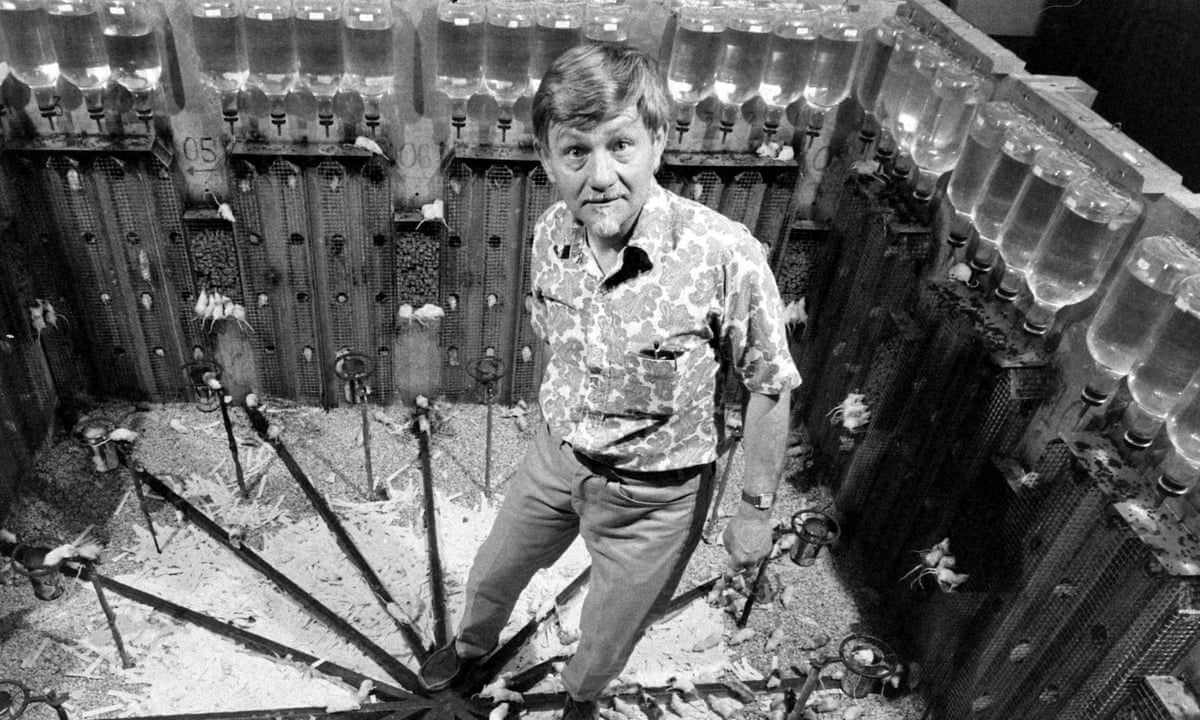
Men without purpose or status decay inward. In his Universe 25 experiments, John Calhoun saw this in his “Beautiful Ones”: mice who withdrew from conflict, preened themselves endlessly, lost the will to reproduce, and retreated from social life.
“Autistic-like creatures, capable only of the most simple behaviours compatible with physiological survival, emerge out of this process. Their spirit has died (‘the first death’). They are no longer capable of executing the more complex behaviours compatible with species survival.”
– Calhoun, Death Squared: The Explosive Growth and Demise of a Mouse Population (1973)
His experiment is often misread as proof that abundance leads to collapse. It showed something worse: when life is emptied of meaning, the spirit dies before the body does.
The Brittle State
People imagine collapse as apocalypse. History instead gives us decay.
A society does not die all at once but stiffens over time. Then a shock, often external, breaks it.
It is like the aging body: over decades, the bones grow brittle until a minor fall breaks a hip, and the body, too weak to recover, dies.
“Men are born soft and supple;
dead, they are stiff and rigid.
Plants are born tender and pliant;
dead, they are brittle and dry.
Thus whoever is stiff and inflexible
is a disciple of death.
Whoever is soft and yielding
is a disciple of life.”
— Lao Tzu, Tao Te Ching, Verse 76
What happens to our society is what has always happened to brittle empires. An external shock will arrive, and a rigid, exhausted people will yield.


And if the mice were to be replaced with pavement apes?
Any animal without purpose dies.